


Treatments
Fixed Braces
Orthodontic treatment for children and adults.
Fixed braces are one of the most established and versatile ways to straighten teeth and improve alignment. At King Street Dental Surgery, we provide fixed orthodontic treatment for children and adults using modern braces to gently and precisely guide teeth into healthy, more functional and more aesthetically pleasing positions.
Fixed braces use small brackets that are attached to the teeth and orthodontic wires that apply carefully controlled pressure over time. They can be used to address a wide range of orthodontic concerns; including crowding, rotations, spacing, protruding teeth and bite problems.
Importantly, orthodontic treatment isn’t simply about having straighter teeth. Correcting the position of your teeth can also make them easier to keep clean and can improve the way your upper and lower teeth meet and function.
What Are Fixed Braces?
Fixed braces consist of small brackets that are bonded to the front of your teeth and connected by a thin orthodontic wire; known as archwire.
The wire is held within the brackets and applies gentle, controlled force that gradually moves the teeth. As treatment progresses, the brace is adjusted to continue guiding the teeth towards their planned positions.
Because fixed braces remain attached to your teeth throughout treatment, they can provide very precise control over individual tooth movements. They are particularly versatile and can be used to address more complex alignment and bite problems.
What Can Fixed Braces Treat?
Fixed orthodontics can be used to address a wide variety of dental alignment problems, including:
- Crowded teeth
- Rotated or twisted teeth
- Gaps and spacing
- Protruding teeth
- Uneven tooth alignment
- Overbites
- Underbites
- Certain crossbites
- Other problems with the way the upper and lower teeth meet
The exact treatment required depends on your individual teeth, jaws and bite. Your orthodontic assessment will determine what movements are required and which course of treatment is most appropriate.
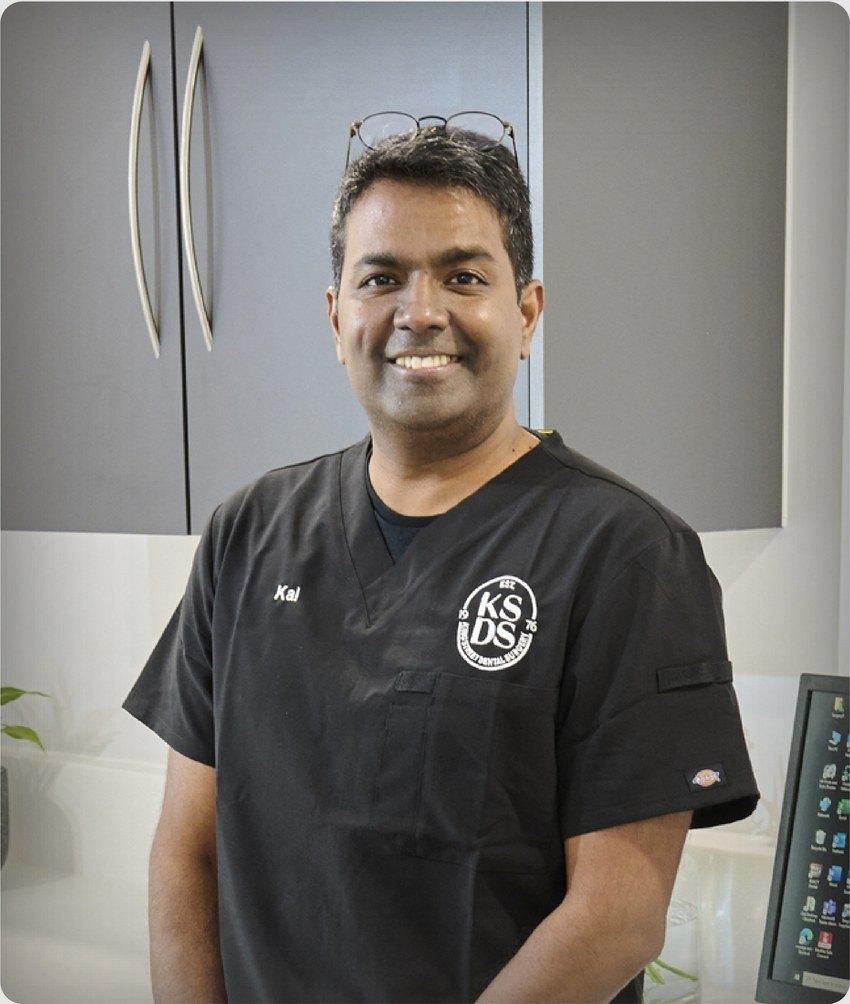
Dr Pitani is our orthodontic/fixed brace specialist here at King Street Dental Surgery.
Metal Or Ceramic Fixed Braces – It’s Your Choice
Fixed braces don’t necessarily have to look like the traditional metal ‘train tracks’ that many people remember from childhood.
Metal braces
Modern metal brackets are smaller and more refined than older designs. They remain a highly effective option and can provide excellent control over tooth movement.
Ceramic or tooth-coloured braces
For patients who would prefer a more discreet appearance, ceramic or tooth-coloured brackets can provide an alternative to conventional metal braces.
These brackets are designed to blend more closely with the natural colour of your teeth, making the appliance less noticeable during treatment. However, ceramic brackets do have different characteristics from metal brackets; Dr Pitani will explain whether they are appropriate in your case during your assessment.
Fixed Braces For Adults
Orthodontic treatment isn’t just for children and teenagers, despite what you may think.
Adults can benefit from orthodontic treatment at any age, provided their teeth and gums are healthy enough for treatment.
You may be considering fixed braces because you have always been unhappy with the position of your teeth, or because your teeth have moved over time.
For adults, orthodontic treatment can also form part of a wider cosmetic or restorative treatment plan. For example, aligning teeth before composite bonding, veneers or crowns can sometimes allow for a more conservative and predictable result.
Fixed Braces For Children And Teenagers
Orthodontic treatment is often carried out during childhood or adolescence, once most of the adult teeth have erupted.
The ideal timing varies from person to person and is dependent on the development of the teeth and jaw and the orthodontic problem being treated.
Early assessment can help to determine whether treatment is required and, if so, when it would be most appropriate to begin.
What Happens During Fixed Brace Treatment?
Straightening your teeth with fixed braces really is a process – and your treatment will be carefully monitored by Dr Pitani to ensure optimal results.
1. Your initial assessment
We’ll assess your teeth, gums and bite first, before discussing what you’d like to achieve.
Your assessment may involve photographs, digital scans and X-rays where clinically necessary. We’ll then use this information to understand how your teeth are positioned and plan your treatment.
2. Fitting your braces
The brackets are carefully bonded to your teeth before the orthodontic wire is placed.
The process doesn’t usually involve any drilling or injections; however, your teeth may feel different once the brackets and brace is fitted.
3. Regular appointments
You’ll need regular appointments throughout your course of treatment so that we can monitor your progress and make necessary adjustments to the brace as your teeth move.
The exact frequency will depend on your treatment plan.
4. Treatment completion
Once your teeth have reached their planned positions, the fixed braces are removed.
You will then need to wear retainers at night-time to help keep your teeth in their new positions. Retention is an important part of orthodontic treatment because teeth can naturally move, and relapse, over time.
On rare occasions, we may not be able to carry out orthodontic treatment at the practice as the case is too complex/requires an Orthodontist to oversee treatment. In these cases, we will make a referral as necessary.
How Long Do Fixed Braces Take?
It’s important to remember that every orthodontic case is unique. Timelines differ.
Treatment time depends on factors such as the amount of movement required, the complexity of your bite and how your teeth respond to treatment. Orthodontic treatment typically takes between 6 and 30 months, however, Dr Pitani will provide a more individual estimate following your assessment.
It’s important not to judge treatment solely by how quickly the teeth can be moved. Controlled, carefully-planned movement is essential for achieving a stable and functional result.
Fixed Braces vs Invisalign®
At King Street Dental Surgery, we offer patients the choice of both fixed orthodontics and Invisalign®; allowing us to consider which approach is most appropriate for your individual needs.
Neither option is automatically better than the other. The right choice depends on the position of your teeth, your bite, the movements required, your lifestyle and your priorities.
During your consultation, we’ll discuss which option is most appropriate for you, and why.
Looking After Your Teeth During Treatment
Good oral hygiene is particularly important while wearing fixed braces.
Brackets and wires can create additional areas where plaque and food can collect; increasing the risk of tooth decay and gum problems if cleaning isn’t thorough.
We’ll provide detailed guidance on how to clean effectively around your fixed braces, but this will usually include:
- Brushing carefully around brackets and along the gumline
- Cleaning between your teeth with interdental brushes
- Using fluoride toothpaste
- Limiting sugary foods and drinks
- Attending regular dental examinations
- Following any specific dietary advice during treatment
You should continue to attend the practice for routine examinations/hygiene appointments as normal throughout orthodontic treatment.
Does Fixed Orthodontic Treatment Hurt?
Your teeth may feel tender or slightly uncomfortable for a few days after your braces are fitted or adjusted. This is usually temporary as the teeth respond to the gentle forces being applied.
Some patients also experience minor irritation to the lips or cheeks when they first get used to the brackets.
We’ll give you advice on how to manage any discomfort and help you to become accustomed to your braces as quickly as possible.

Fixed Braces At King Street Dental Surgery
If you’re looking for fixed braces in Blackpool, our approach is based on careful assessment and individual treatment planning.
We don’t believe that orthodontic treatment should simply be about achieving straight teeth. The position of your teeth, your bite, your ability to maintain good oral hygiene and the long-term stability of your result all need to be taken into consideration.
Whether you’re an adult looking for a more confident smile, or a parent considering orthodontic treatment for your child, we’ll take the time to explain your options and help you understand what treatment could achieve.
Schedule an appointment today
For further information or to schedule an appointment, please contact us.
FAQs
The most frequently asked questions about fixed braces…
Fixed braces can be used to treat children, teenagers and adults. Treatment timing depends on the individual’s dental development and the problem being treated. Adults can undergo orthodontic treatment at any age, provided their teeth and gums are healthy enough.
Not necessarily. Fixed braces and Invisalign® work in different ways and have different advantages. Fixed braces can provide very precise control and are suitable for a wide range of orthodontic problems, while Invisalign® offers a removable and discreet alternative for many patients. Your assessment will determine which options are suitable for your teeth and bite.
Treatment time varies considerably depending on the complexity of your case. Orthodontic treatment can take approximately 6 to 30 months; although Dr Pitani will provide an individual estimate once your treatment has been planned.
Yes you can. Ceramic or tooth-coloured brackets can provide a more discreet alternative to traditional metal brackets. They are particularly popular with adults who would prefer their orthodontic appliance to be less noticeable.
You can continue to eat a varied diet, but you’ll need to take care eating hard, sticky or very crunchy foods because these can damage the brackets or wires. You may also need to adapt how you eat certain foods during treatment – but we will provide guidance on this.
Yes – retainers are an important part of orthodontic treatment as they help to prevent relapses. Once your braces are removed, your teeth can sometimes want to naturally move towards their previous positions, so wearing a retainer helps to maintain the result you’ve achieved.
What our patients have to say
Get in touch
In need of a speedy consultation or have a question? Please don't hesitate to get in touch with us or leave a message.
We'll ensure a swift response.
- Call us on
- 01253 620552
- Email (new patient enquiries)
- hello@ksds-blackpool.co.uk
- Please note: we are unable to accept new NHS patients.
- Email (appointments for existing patients)
- appointments@ksds-blackpool.co.uk