

Treatments
Extractions
The safest and most appropriate option for your long-term oral health in certain circumstances.
At King Street Dental Surgery, we place great emphasis on preserving natural teeth wherever possible. With modern, restorative treatments such as fillings, crowns and root canal treatment, many damaged or infected teeth can be repaired effectively and retained - and this is always the best case scenario.
Sometimes, however, a tooth may be too badly damaged, decayed, fractured or infected to restore successfully. In these circumstances, tooth extraction may be the safest and most appropriate option for your long-term oral health.
We understand that the thought of having a tooth removed can be worrying. Our experienced team will explain why an extraction is being recommended, discuss any alternatives available and make sure you are comfortable throughout your treatment.
Why Might A Tooth Need To Be Removed?
A dental extraction may be recommended for a number of reasons, including:
- Extensive tooth decay that cannot be restored
- A tooth that has fractured or broken beyond repair
- Severe gum disease causing a tooth to become very loose
- Dental infection or an abscess
- Significant trauma or injury
- Certain wisdom teeth problems
- Creating space as part of orthodontic treatment in carefully-planned, individual cases
Extraction is generally only considered when the tooth cannot be predictably restored or if retaining it could compromise your oral health.
What Happens During A Tooth Extraction?
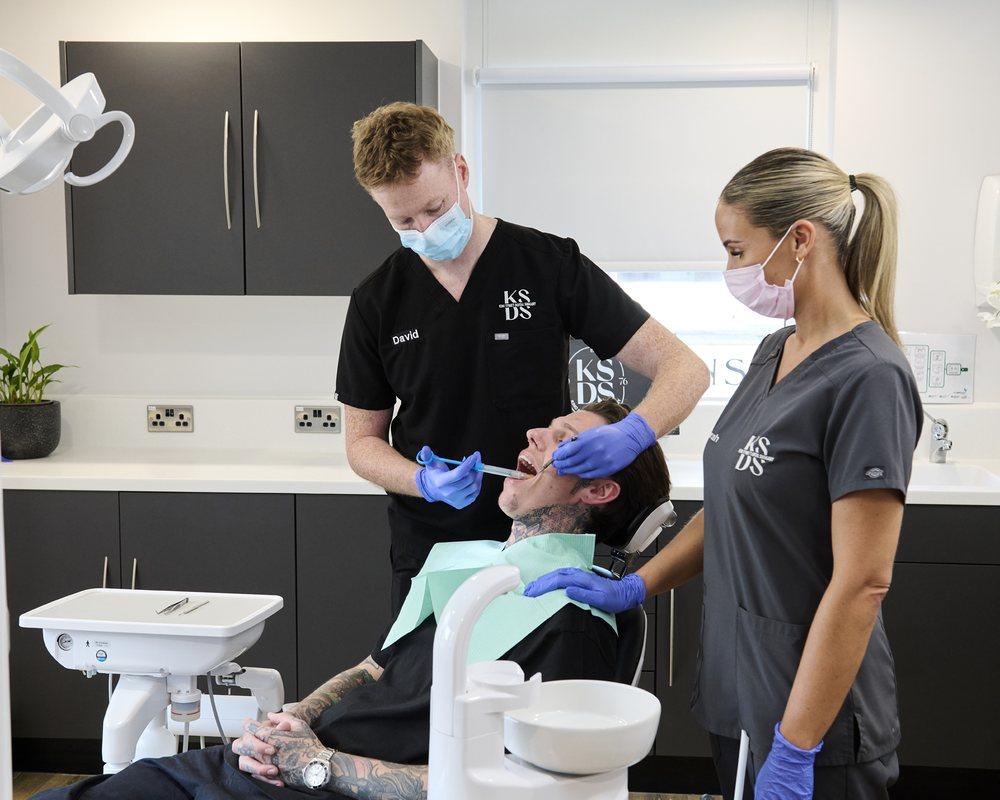
Before treatment, we’ll examine the tooth and may take an X-ray to understand its position and the shape of its roots.
A local anaesthetic is used to numb the area, so you should not feel pain during the extraction. You may feel some pressure as the tooth is gently loosened and removed.
Most extractions are straightforward. Occasionally, a tooth that is particularly broken down, has complex roots or is difficult to access may require a more involved surgical approach.
In these more complex cases, we have a couple of options available. Dr Frank Hughes is our on-site specialist in minor oral surgery. He has decades of experience in performing more complex extractions in the comfort of our practice. Alternatively, we can send a referral to the Lancashire Oral Surgery Clinic (just down the road from our practice), who will organise an appointment for extraction with one of their minor oral surgery specialists.
However your tooth is extracted, the procedure will be clearly explained to you and you’ll be provided with clear aftercare instructions to support your recovery.
Is Tooth Extraction Painful?
We appreciate that this is one of the biggest concerns for patients - but there’s no need to be worried.
With local anaesthetic, the area should be completely numb during treatment. You may feel movement or pressure, but you should not experience sharp pain.
It is normal to experience some discomfort, tenderness or swelling as the anaesthetic wears off. This is usually most noticeable during the first few days and should gradually improve.
If you feel particularly anxious about dental treatment, we can also discuss sedation and whether this may be appropriate for you.
Caring For Your Mouth After An Extraction
Following an extraction, a blood clot forms in the socket and is an important part of the natural healing process. It’s therefore important not to disturb the area during the first 24 hours.
We’ll give you personalised aftercare instructions, but these will generally include:
- Avoiding vigorous rinsing on the day of treatment
- Avoiding smoking or vaping while the area heals
- Taking care with hot food and drinks whilst your mouth is numb
- Eating softer foods initially if the area feels tender
- Avoiding strenuous activity immediately after treatment
- Keeping your mouth clean while being gentle around the extraction site
After 24 hours, gentle salt-water rinsing may be recommended.
What Happens After A Tooth Is Removed?
Once a tooth has been extracted, we’ll discuss whether the gap should be replaced and which options might be appropriate for you.
Depending on your circumstances, these may include:
Dental bridge - a fixed restoration that uses neighbouring teeth or implants to support a replacement tooth.
Dental implant - an artificial tooth root that can support a crown; providing a fixed replacement that closely replicates the function of a natural tooth.
Denture - a removable replacement that can be used to replace one or several missing teeth.
In some cases, replacing a tooth may not be necessary - or it may not be your preferred option. We’ll discuss the choices available with you based on your individual circumstances.

Tooth Extractions at King Street Dental Surgery
If you’re looking for a dentist on the Fylde Coast for a tooth extraction, you can expect clear advice, careful treatment and a patient-focused approach at King Street Dental Surgery.
We will always consider whether your natural tooth can be saved before recommending removal. If extraction is necessary, our priority is to make the experience as comfortable and straightforward as possible while considering the health and function of your smile in the longer term.
If the missing tooth can be replaced, we can also discuss bridges, dentures and dental implants as part of your wider restorative treatment plan.
Book an examination
If you have a painful, broken or severely damaged tooth; don’t put off having it assessed. An examination will allow us to establish whether the tooth can be saved or whether extraction is the most appropriate option. By being proactive and visiting a dentist for regular routine check-ups or at the first sign of discomfort, you’re giving yourself the best chance of retaining your tooth.
FAQs
The most frequently asked questions about tooth extractions…
The area will be numbed with local anaesthetic before treatment. You should not feel pain during the procedure, although you may experience some pressure as the tooth is loosened and removed.
A straightforward extraction can often be completed relatively quickly, but the time required depends on the tooth and its individual circumstances. More complex extractions may take longer and require a different approach.
Soft foods can be easier to manage during the first few days. You should take care when eating while the area is numb and follow the specific advice provided by your dental team.
It’s best to avoid smoking and vaping whilst the extraction site is healing. Smoking can delay healing and increase the risk of complications such as infection and dry socket.
Dry socket is a complication that can occasionally occur after a tooth extraction. It happens when the blood clot that normally forms in the tooth socket is lost or breaks down before the area has healed; leaving the underlying bone exposed. It can cause increasing pain a few days after an extraction; sometimes accompanied by an unpleasant taste or bad breath. Smoking is one of the factors that can increase the risk of dry socket. If you develop significant or worsening pain after an extraction, particularly a few days after treatment, contact the surgery so we can assess the area and provide appropriate treatment.
Not necessarily. Whether a missing tooth should be replaced depends on its position, your bite, the function of your remaining teeth and your personal preferences. If replacement is appropriate, your dentist will discuss the available options including dental implants, bridges and dentures.
What our patients have to say
Get in touch
In need of a speedy consultation or have a question? Please don't hesitate to get in touch with us or leave a message.
We'll ensure a swift response.
- Call us on
- 01253 620552
- Email (new patient enquiries)
- hello@ksds-blackpool.co.uk
- Please note: we are unable to accept new NHS patients.
- Email (appointments for existing patients)
- appointments@ksds-blackpool.co.uk